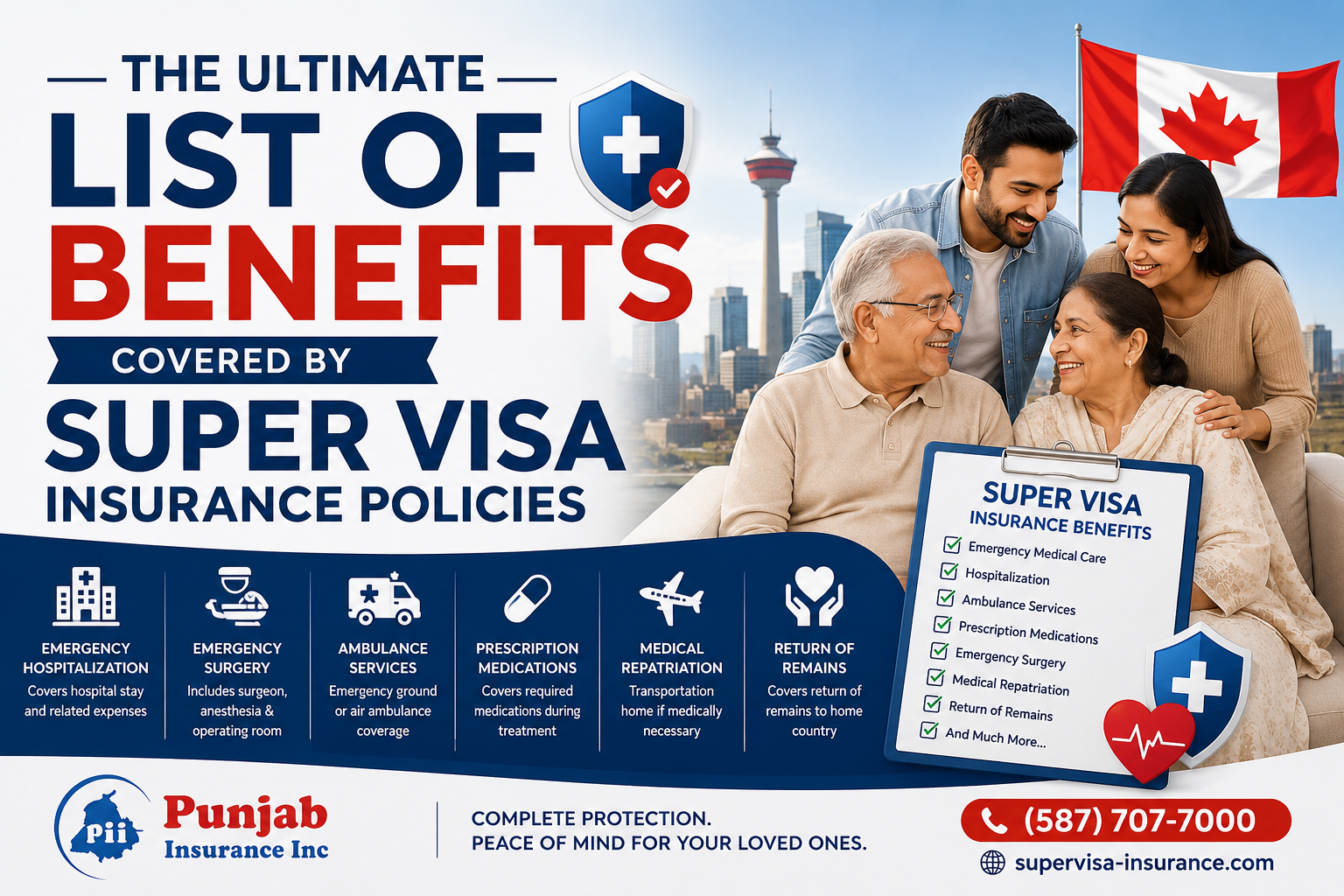


Picture this: your mother’s flight is booked, her medical exam is done, and your income paperwork is ready. Then the application comes back because the insurance policy was a few details short of what the visa officer expected. It happens more often than families realize, and it is almost always preventable.
Here is what IRCC looks for in Super Visa insurance in 2026, and how to check a policy before you rely on it.
Why IRCC Insists on Private Insurance
Parents and grandparents arriving on a Super Visa are visitors, so provincial health plans such as Alberta Health Care do not cover them. If your father ends up in an emergency room in his second month here, the bill goes to the family unless a policy is in place. IRCC makes insurance a condition of the visa so that Canadian hospitals and sponsors are not left carrying those costs.
The Five Things a Policy Must Do
Think of IRCC’s rules as five boxes that all need a tick:
- Enough coverage. The policy needs an emergency medical limit of at least $100,000 per person.
- The right scope. It should pay for medical treatment, hospital stays and the cost of returning the traveller to their home country.
- A full year of protection. Coverage must run at least twelve months from the day your parent arrives in Canada.
- Cover on every entry. If your parent leaves and comes back during the visa period, the policy must still apply.
- Proof it exists. Visa officers want evidence the policy is purchased, so a quote or a sales email will not do.
Miss any one of these and the application is at risk, even if the other four are perfect.
Who Is Allowed to Sell the Policy?
Insurance used to come only from Canadian companies. Since January 28, 2025, IRCC also accepts policies from foreign insurers that have authorization from the Office of the Superintendent of Financial Institutions (OSFI).
Even so, many families stay with a Canadian insurer. Claims are easier to handle when the company, its support team and its hospital contacts are in the same country and time zone as you. If you consider a foreign insurer, verify its OSFI authorization before you pay anything.
What Is New This Year
The insurance minimums did not change in 2026, but the surrounding rules did. On March 31, 2026, IRCC revised how a sponsor’s income is calculated for Super Visa applications, which gives some households an easier route to qualifying. Income is still measured against the Low Income Cut-Off for your family size, and the figures are updated regularly. Look at IRCC’s current table on the day you apply instead of relying on a number from last year’s article.
Reading Between the Lines of a Policy
Two policies can both say “$100,000 coverage” and still behave very differently when a claim arrives. Look closely at:
- Pre-existing conditions. Standard plans often exclude them. Some will cover a condition that has been stable for a set period, so ask for the exact terms.
- Deductibles. A lower premium sometimes comes with a higher amount you pay first.
- Exclusions. Routine check-ups and non-emergency care are usually not covered.
- Claim process. Find out whether the insurer pays the hospital directly or reimburses you later.
Mistakes We See Again and Again
- Buying a policy that ends before the twelve-month mark.
- Uploading a quotation in place of a paid policy confirmation.
- A spelling error or wrong birth date on the policy.
- Picking the cheapest option without reading what it leaves out.
- Choosing a start date that does not fit the travel plan, when many insurers will adjust it if you ask before the policy takes effect.
Paying Monthly and Getting Money Back
Spreading the premium over monthly payments is common, and it makes a year of coverage easier to budget. Most insurers also refund the premium if the visa is refused, usually minus a small administration fee. These terms vary by company, so get them in writing before you pay.
Before You Click Submit
Check that your policy shows the $100,000 limit, a twelve-month term, coverage on every entry, and an eligible insurer. Confirm the names and dates match the passport exactly, and keep the payment confirmation within reach.
When you are ready to compare options, you can request Super Visa insurance quotes from Punjab Insurance Calgary or browse the Super Visa insurance FAQs.
Frequently Asked Questions
What is the minimum coverage amount for Super Visa insurance?
IRCC sets the floor at $100,000 in emergency medical coverage. You can choose a higher limit if you want extra protection.
How long does the policy need to last?
At least one year from the date your parent or grandparent enters Canada, and it must remain valid for each entry.
Will IRCC accept a quote as proof?
No. You need confirmation that the policy has been bought, such as the policy document and proof of payment.
Can an insurer outside Canada issue the policy?
Yes, provided it is authorized by OSFI. IRCC has accepted such policies since January 28, 2025.
Are pre-existing conditions covered?
Not automatically. Some plans cover conditions that are stable under specific terms, while others exclude them completely.
Can the premium be paid in monthly instalments?
Many insurers offer this for the one-year policy. Make sure you can still show proof of purchase when you apply.
Do I get a refund if the visa is refused?
Most insurers return the premium minus an admin fee. Check the refund terms before buying.