

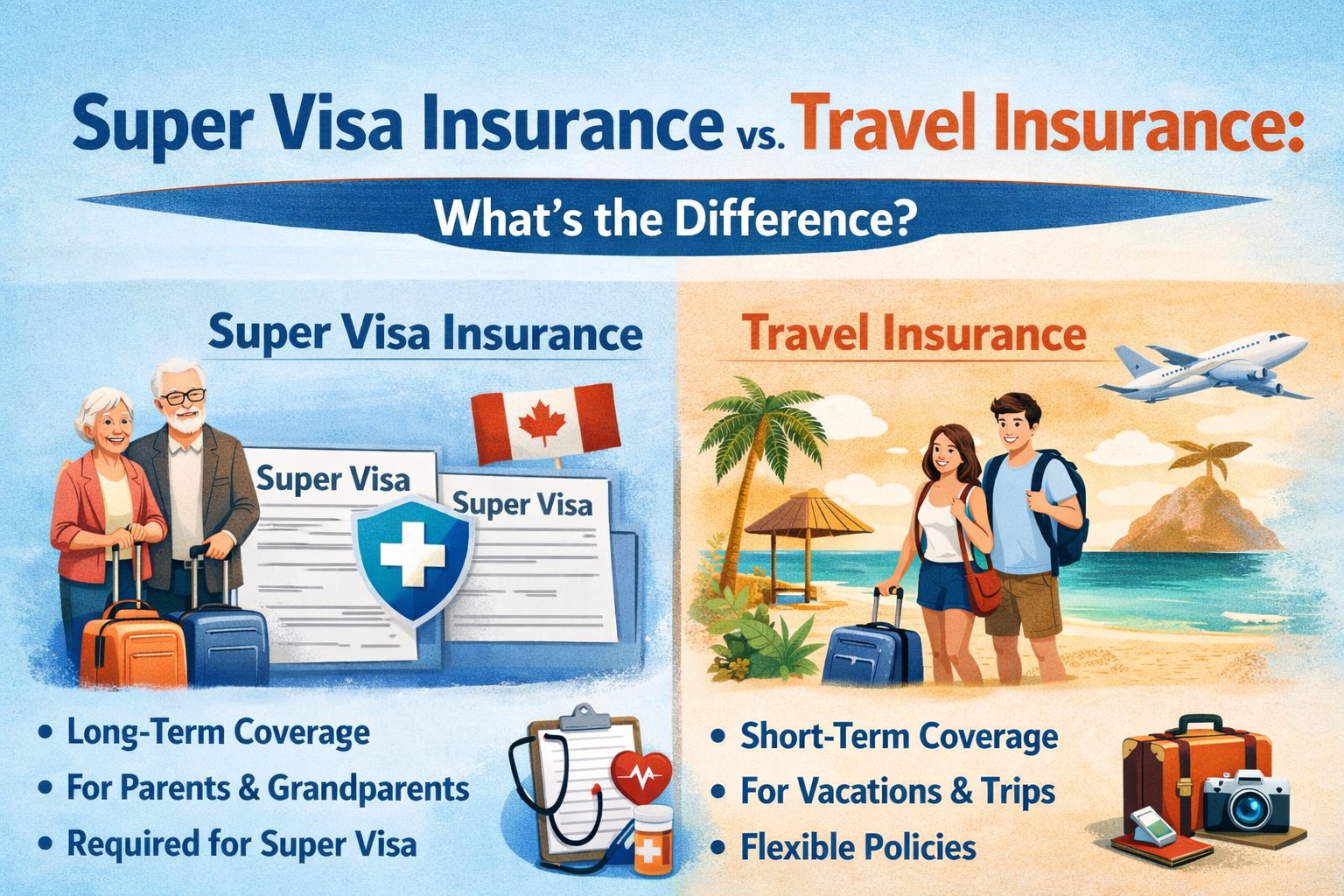
Bringing your parents or grandparents to Canada is a milestone moment for any family. However, navigating the Canadian immigration landscape requires more than just a plane ticket and an invitation letter. One of the most common points of confusion for sponsors is the insurance requirement. Specifically, what is the difference between Super Visa Insurance and regular Travel Insurance?
While they might seem similar on the surface, choosing the wrong one can lead to a visa rejection or — worse — massive out-of-pocket medical expenses. At Punjab Insurance, we believe in empowering our community with the right information.
This comprehensive guide breaks down the legal requirements, costs, and coverage nuances of Super Visa Insurance vs. Travel Insurance in 2026.
What is Super Visa Insurance?
The Super Visa is a special category of visa that allows parents and grandparents of Canadian citizens or permanent residents to stay in Canada for up to five years per visit, with the visa itself being valid for up to 10 years.
Because these visitors are staying for an extended period and are not eligible for provincial healthcare (like OHIP or MSP), the Canadian government mandates a specific type of private medical insurance. Super Visa Insurance is a specialized, high-limit emergency medical policy designed to meet the strict criteria set by Immigration, Refugees and Citizenship Canada (IRCC).
IRCC Mandatory Requirements for 2026:
- Minimum Coverage: Must provide at least $100,000 in emergency medical coverage.
- Duration: Must be valid for at least one year (365 days) from the date of entry.
- Scope: Must cover healthcare, hospitalization, and repatriation.
- Verification: Must be paid in full (or a deposit paid for an approved installment plan) and come from an authorized provider.
What is Regular Travel Insurance?
Travel Insurance (often called “Visitors to Canada Insurance”) is designed for tourists, business travelers, or relatives visiting for a short duration — typically six months or less.
While regular travel insurance provides emergency medical protection, it is much more flexible and does not have to meet the rigid legal standards required for a Super Visa application. It is generally used by those entering on a standard Visitor Visa (TRV).
Key Differences: Super Visa Insurance vs. Travel Insurance
To help you choose the right protection for your loved ones, let’s compare these two options across five critical categories.
1. Legal Compliance and Visa Approval
- Super Visa Insurance: This is a mandatory document for the Super Visa application. If your policy does not show a $100,000 minimum and a one-year duration, the visa will be denied.
- Travel Insurance: This is optional (though highly recommended) for standard visitor visas. It is not a legal prerequisite for entering Canada as a tourist.
2. Duration of Coverage
- Super Visa Insurance: You must purchase a 365-day policy upfront. Even if your parents only plan to stay for four months, the government requires a one-year commitment to ensure they are covered if they decide to stay longer.
- Travel Insurance: You can buy coverage for as little as 5 days or up to 6 months. It is tailored to the specific dates of a vacation.
3. Coverage Limits
- Super Visa Insurance: Starts at a $100,000 minimum. Many families at Punjab Insurance opt for $150,000 or $200,000, given that a single week in a Canadian ICU can easily exceed six figures.
- Travel Insurance: Coverage limits are flexible. You can often find policies as low as $10,000 or $25,000, which is usually insufficient for elderly travelers but acceptable for young tourists.
4. Payment Options and Refunds
- Super Visa Insurance: Since 2025, IRCC has allowed more flexibility with monthly payment plans. However, if the visa is denied, you are entitled to a 100% refund (minus small administrative fees). If your parents leave Canada early, you can often get a pro-rated refund for the unused portion of the policy.
- Travel Insurance: Usually paid in full at the time of purchase. Refund policies for early departure are often stricter than those for Super Visa policies.
5. Repatriation Benefits
- Super Visa Insurance: Repatriation (the cost of returning a body to the home country in the event of death) is a non-negotiable requirement.
- Travel Insurance: While many policies include it, it is not always a standard feature in “budget” travel plans.

2026 Policy Updates: What You Need to Know
The Canadian government recently updated several rules to make the Super Visa more accessible. If you are applying through Punjab Insurance this year, keep these changes in mind:
- Foreign Insurers: IRCC now allows certain authorized foreign insurance companies to provide Super Visa insurance, provided they meet Canadian regulatory standards (OSFI).
- Longer Stays: The initial stay period has been solidified at 5 years. Ensure your insurance policy can be easily renewed from within Canada to maintain status.
- Monthly Installments: Families no longer need to pay $2,000–$5,000 in a single lump sum. Monthly payment options have become the standard for 2026, easing the financial burden on sponsors.
Why “Cheapest” Isn’t Always “Best”
When searching for “Super Visa Insurance Punjab Insurance,” it’s tempting to sort by the lowest price. However, for parents and grandparents, Pre-existing Medical Conditions (PED) are the most critical factor.
A cheap policy might meet the $100,000 requirement but exclude coverage for a heart condition or diabetes. At Punjab Insurance, we specialize in Stable Chronic Condition riders. This ensures that if your father has a sudden complication related to a condition he’s had for years, the insurance will actually pay the bill. Without this, a “cheap” policy is essentially useless for many seniors.
How to Choose the Right Policy with Punjab Insurance
Selecting the right plan involves balancing your budget with your parents’ health needs. Here is our recommended checklist:
- Check the Stability Period: Most policies require a condition to be “stable” (no change in medication or hospital visits) for 90 to 180 days before the policy starts.
- Look for Monthly Payments: If you prefer cash flow management, ask us about providers that offer monthly installments.
- Verify the Deductible: Choosing a higher deductible (e.g., $1,000) can lower your monthly premium significantly, but you must be prepared to pay that amount if a claim occurs.
- Confirm 24/7 Support: Ensure the provider has a Canadian-based claims team that can pay hospitals directly (Direct Billing).

Conclusion
The difference between Super Visa Insurance and Travel Insurance is the difference between a legal necessity and a travel convenience. For a Super Visa, you need a high-limit, one-year policy that adheres to IRCC regulations. For a short visit on a tourist visa, a standard travel plan will suffice.
At Punjab Insurance, we understand the cultural and financial importance of family reunions. We take the guesswork out of the application process by comparing the top Canadian providers to find you the best rates with the most comprehensive coverage.
Ready to bring your parents home?
Get a Free Super Visa Insurance Quote Today and let our experts help you find a plan that meets IRCC requirements and protects your family’s future.
Related guide: Travel Insurance Canada